The target of the trip was to gather ideas for the development of manor houses in our own region, to learn about the work of Latvian manor house operators, and to offer development ideas for Latvian manor house sites. It was therefore not a leisure trip but an interactive journey that proved highly beneficial for both Finnish and Latvian Manor operators. The study trip was to the Latvian Leader Action Group Brasla area, which is situated slightly north-east of Riga. The trip was attended by manor operators from the region, as well as staff from Leader Action Group SILMU.
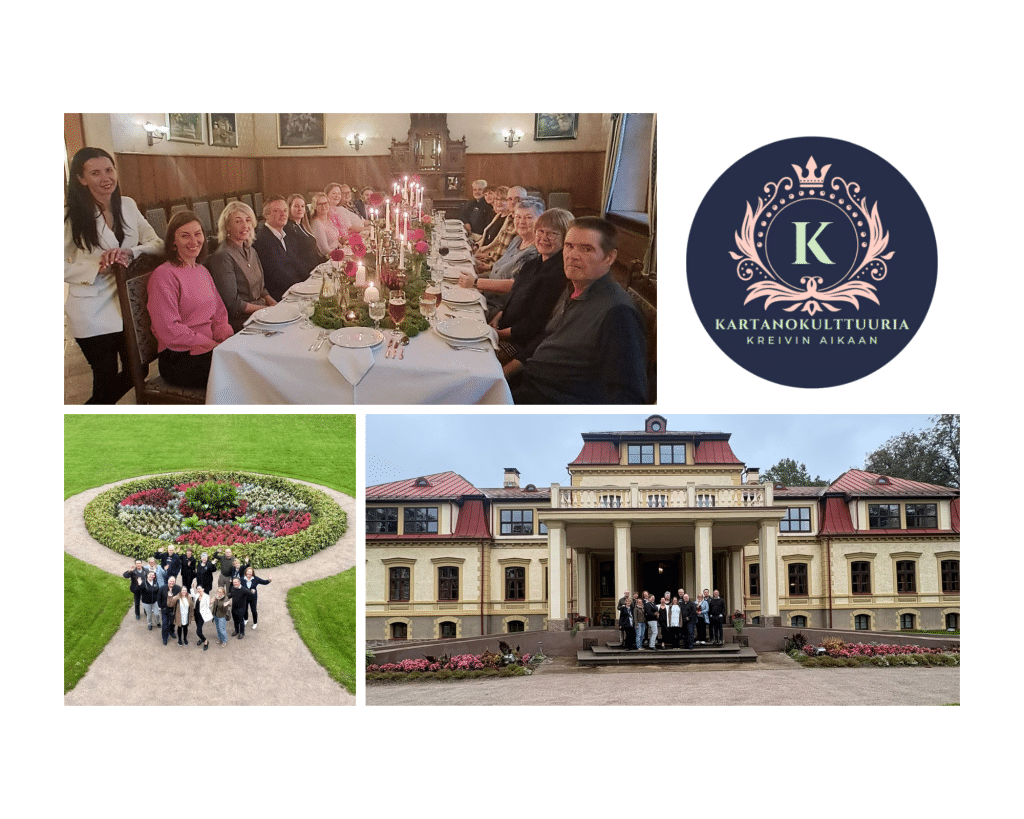
There was a sense of excitement in the air once again as we loaded our luggage onto the coach at the Porvoo office on Thursday morning. We set off on a study trip to Latvian manor houses with other manor operators from our region. The outward journey by ferry went smoothly, accompanied by a delicious brunch. In the early evening, we arrived at Diklu Manor in the Valmiera area, where we were accommodated in magnificent rooms. After settling in, we enjoyed a delicious dinner with our partner, Leader Action Group Brasla. The buzz of conversation was non-stop, and networking and the exchange of experiences began immediately.
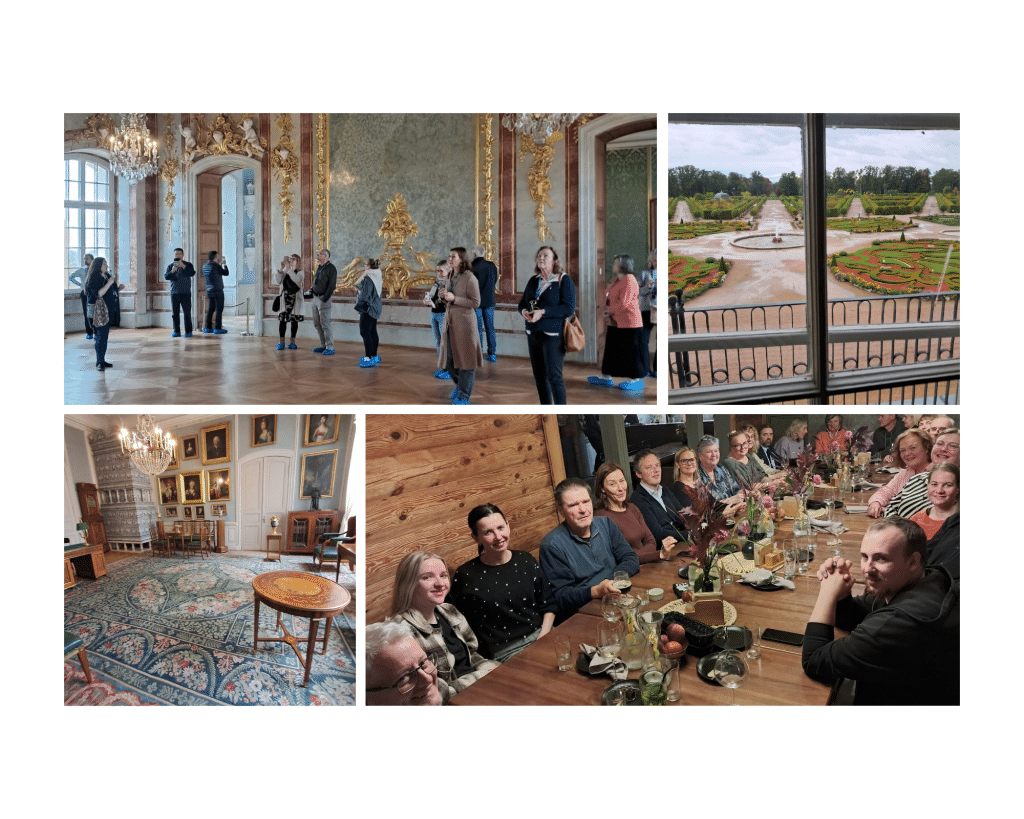
We spent Friday morning travelling by minibus to Rundale Palace. During the journey, Rudite Vasile told us about the work of Leader Brasla and the region’s fascinating history. In the breathtaking rooms of Rundale Palace, the palace’s director, Laura Luse, told us about the palace’s history and its current activities. The palace has had an eventful history and is Latvia’s most significant Baroque and Rococo-style architectural monument. The palace was originally built between 1736 and 1740 as a summer residence for Johan Biron – the favourite duke of the Russian Empress Anna Joanovna. Adjacent to the palace is also a magnificent French garden with rose beds, although due to the weather we were unable to explore it in more detail, as the electric cars were not running in the rain. Today, the palace attracts over 200,000 visitors a year and hosts a wide variety of events: receptions, balls, concerts, theatre and opera performances, as well as film shoots.
On Saturday, after breakfast, Andra, the manager of the manor, gave us a tour of the Diklu Manor. This four-star design hotel, gourmet restaurant and natural spa was exceptionally well-preserved and refurbished. The history of Diklu Manor stretches back as far as 1456, and the current main building was completed in 1896 by Baron Paul von Wolf. The manor is a striking example of Neo-Baroque architecture, with its mansard roof and elegant façades. The interiors have retained an exceptional number of original features, such as decorative tiled stoves, fireplaces and wood panelling. It transpired that the manor’s current owner had no intention of making any significant profit from it; rather, if the books balanced (income minus expenditure), the situation was considered satisfactory and the owner content.
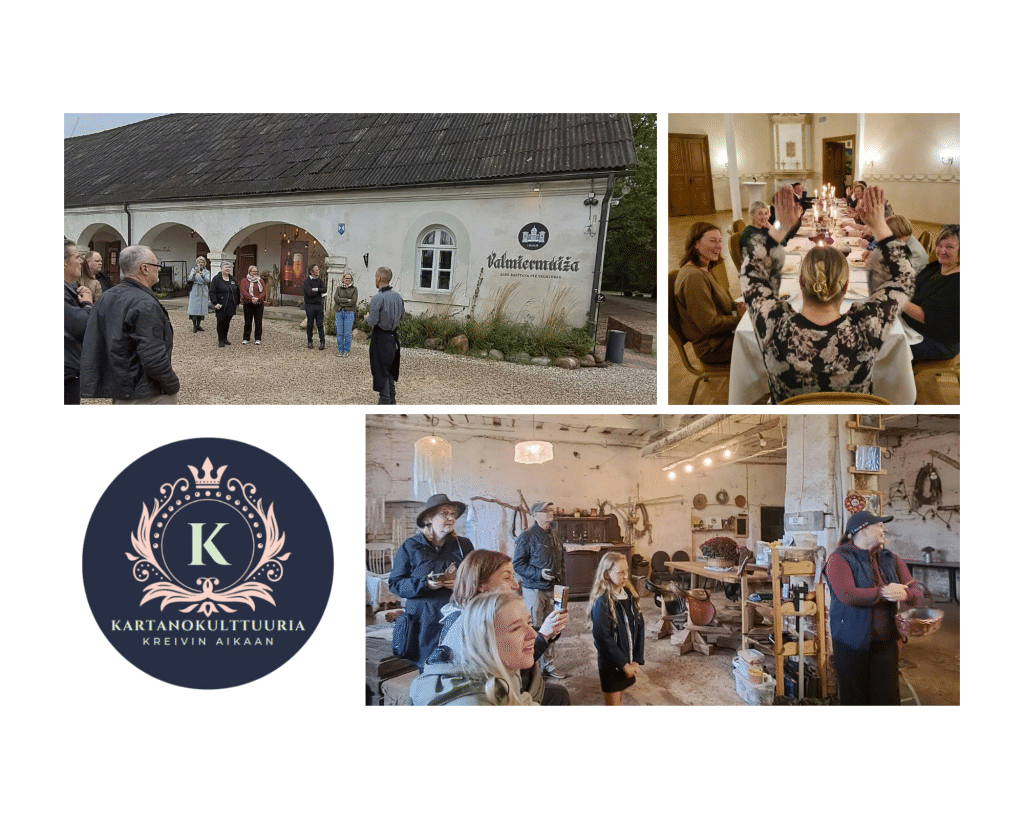
The Valmiermuiža Brewery is one of Latvia’s best-known and most highly regarded microbreweries. It is situated in the historic manor house setting of the village of Valmiermuiža, just north of the town of Valmiera in northern Latvia. The brewery is particularly renowned for its traditional, slow brewing process and its high-quality, unpasteurised, live beers. After the brewery tour, we enjoyed a light lunch and sampled the brewery’s products. Following lunch, we were taken on a short horse-drawn carriage ride in a nearby park, after which we headed towards the Valmiermuiža stables. We learnt about the stables’ current activities; in addition to traditional horse-rearing and riding school activities, the stables organize various tourism-related events: stable tours, horse riding and carriage rides, weddings, as well as parties and workshops for children.
After the tour of the stables, we headed to Valmiera’s old town, where our brilliant guide, Liene, gave us a tour of the historic city center. We toured the town’s most famous sights: St Simon’s Church, the ancient market square, the music school, the Valterkalnins viewpoint, Valmiera Castle and the museum complex. After the tour, we returned to the hotel to get ready for dinner. Following dinner, Heli presented the Manor project’s results and impacts; feedback was also gathered from the participants, along with information on how the project had benefited the estate operators.
On Sunday, we set off for Tallinn straight after breakfast so that we could get to the ferry in good time. The ferry left Tallinn harbor at half past three, and we arrived in Porvoo about eight o’clock. Inspired by our experiences on the trip and the new ideas we’ve gained, we’ll continue our development work both in our region and internationally through the networks established during the project.
PALDIES!